
Why is Alexandrite So Expensive?
Alexandrite is one of the most coveted gemstones in the world — and one of the least understood. If you've ever encountered a fine alexandrite and wondered why the price tag seems almost impossible to justify, you're not alone. The answer lies in a rare combination of geological scarcity, optical phenomenon, and an unforgiving grading standard that eliminates most stones before they ever reach the market.
A Stone That Changes Color — Really Changes
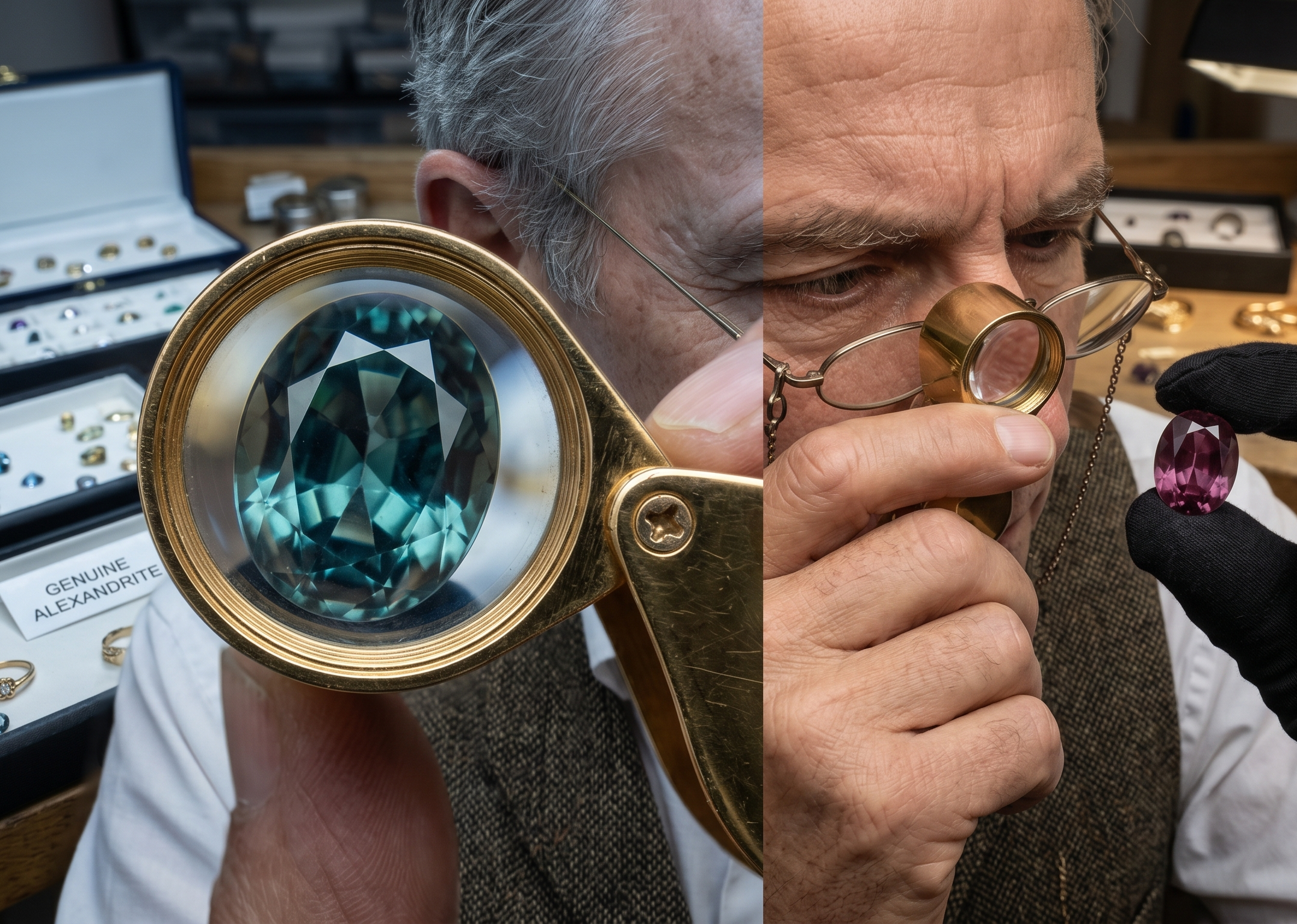
Alexandrite belongs to the chrysoberyl family and is famous for its dramatic color change: green or teal in daylight, red or purplish-red under incandescent light. This isn't a subtle shift. In a fine stone, it's a transformation — the same gem appearing to be two entirely different stones depending on the light source.
This effect is caused by the way alexandrite absorbs light. Its chromium content creates a narrow transmission window that sits right on the boundary between red and green wavelengths. The human eye, sensitive to both ends of the spectrum, interprets the stone differently depending on which wavelengths dominate the light source. The result is a color change that no other major gemstone can replicate with the same intensity.
But here's what separates fine alexandrite from ordinary alexandrite: the color change must be strong, and both colors must be attractive. A stone that shifts from muddy olive to brownish-red has the phenomenon — but not the value. The market rewards stones where the daylight color is a clean, vivid green and the incandescent color is a true, saturated red. Stones that achieve this are extraordinarily rare.
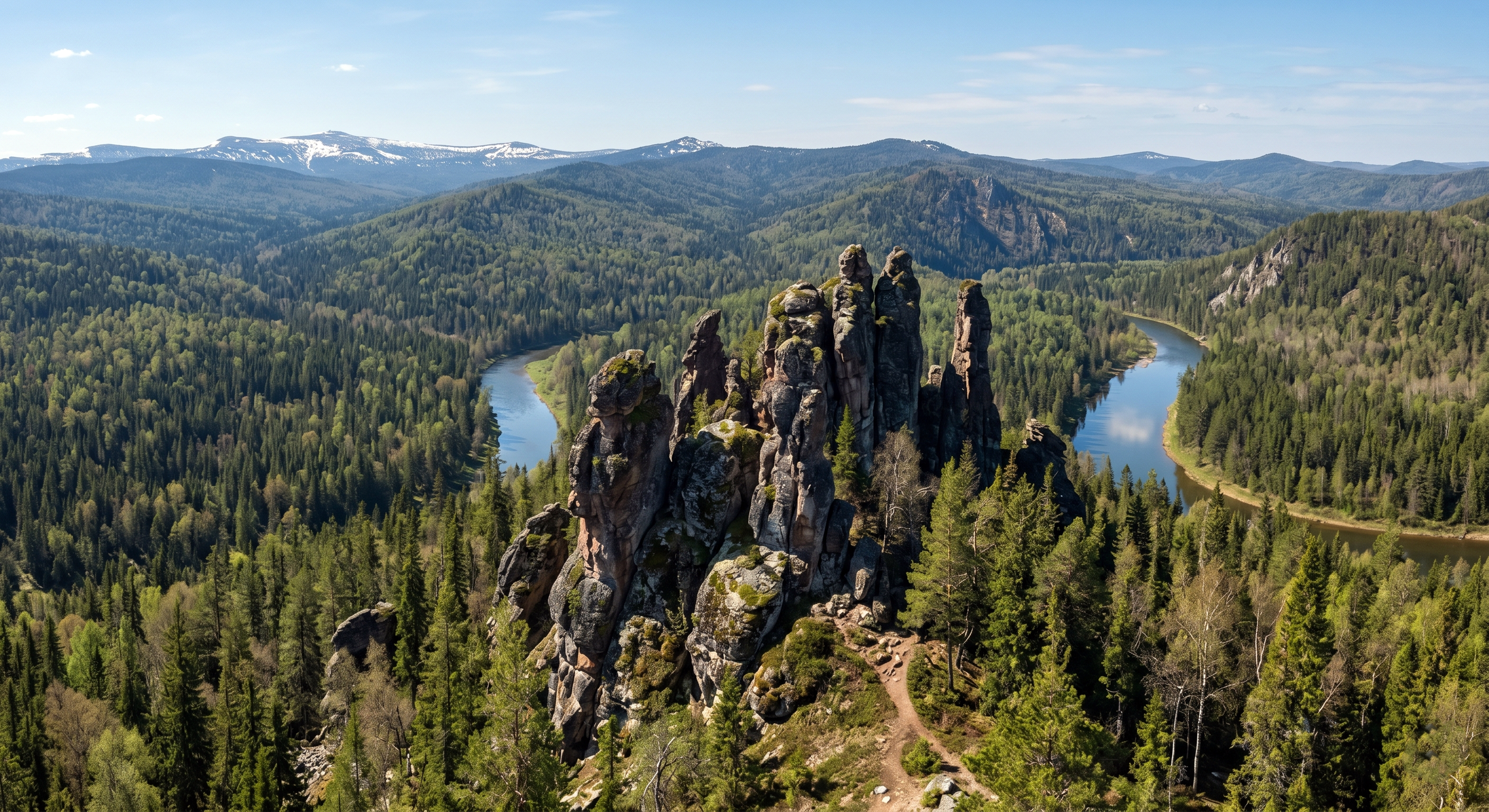
Ural Mountains Russia, original source of the world's finest natural alexandrite
The Scarcity Problem
Original alexandrite deposits in Russia's Ural Mountains, discovered in the 1830s, are essentially exhausted. The stones that came from Ural are considered the gold standard — fine color change, exceptional clarity, and a slightly bluish-green daylight appearance that collectors prize above all others. Antique Russian alexandrite commands premiums that reflect both quality and provenance.
Today, significant deposits exist in Brazil, Sri Lanka, East Africa, and India. Brazilian alexandrite can be exceptional, with strong color change and good saturation. Sri Lankan stones tend toward lighter tones. East African material varies widely. But across all origins, the supply of truly fine alexandrite — stones with strong, clean color change in both directions — remains constrained relative to demand.
Fine alexandrite over one carat is genuinely rare. Fine alexandrite over three carats is exceptional. At five carats and above with strong color change and good clarity, you're in trophy stone territory.
Why Jewelers Are Paying Attention
For jewelers and designers, alexandrite presents both an opportunity and a sourcing challenge. Client demand for rare, story-driven stones has grown significantly. Alexandrite delivers on every front: it has a compelling history, a visual effect that photographs dramatically, a scientific explanation that educated clients find fascinating, and a scarcity that justifies serious price points.
The sourcing challenge is that the market for fine alexandrite is thin and relationship-dependent. Most of what circulates at commercial price points is either synthetic (lab-created alexandrite is widely available and visually convincing), color-change garnet (often mislabeled), or stones with weak color change that don't justify collector-grade pricing.
Working with a knowledgeable dealer matters enormously here. The difference between a fine natural alexandrite and a synthetic can be invisible to the naked eye and requires gemological documentation. Origin matters to sophisticated buyers. And understanding what "strong color change" actually means — versus what gets called strong in casual trade conversation — requires genuine experience with the stone.
What Drives the Price
When you break down alexandrite pricing, several factors converge:
Color change strength and quality | This is the primary value driver. A stone with 80–100% color change, clean colors in both directions, and no gray or brown modifier commands a significant premium over stones with partial or muddy shifts.
Carat weight | Fine alexandrite prices escalate sharply per carat as size increases. A two-carat fine stone is not twice the price of a one-carat — it may be four or five times the price, because large fine stones are disproportionately rare.
Origin | Russian alexandrite, particularly antique material, commands the highest prices. Fine Brazilian alexandrite is the current benchmark for new production.
Clarity | Alexandrite is typically eye-clean, and the market expects it. Significant inclusions reduce value, though they are more tolerated in very large or historically important stones.
Treatment | Fine alexandrite is not treated. Unlike ruby or sapphire, where heat treatment is standard and accepted, alexandrite is valued in its natural state. Documentation of no treatment adds value.
The Bottom Line
Alexandrite is expensive because it is genuinely rare, genuinely remarkable, and genuinely difficult to source at fine quality. For jewelers looking to offer clients something beyond the expected — a stone with history, science, visual drama, and investment-grade scarcity — it deserves serious attention.
Working with a trusted source who can provide documentation, discuss origin, and stand behind quality is not optional with alexandrite. It's the only way to buy it well.
Looking for Fine Alexandrites?
Jacoby Gems works with jewelers and designers to source natural alexandrite with full gemological documentation. Whether you're looking for a specific size, origin, or color change profile, we're happy to discuss what's available and what's right for your client.
