
Colombian vs. Zambian Emeralds:
A Jeweler's Guide to Origin, Quality & Sourcing
Origin is everything in the emerald world — and no origin debate is more active in the trade right now than Colombian versus Zambian. Both produce fine material. Both have loyal advocates. And both are frequently misrepresented in the market. For jewelers who want to source emeralds confidently and advise clients accurately, understanding the real differences between these two origins is essential.
This guide covers what distinguishes Colombian and Zambian emeralds at the quality level, where the market currently stands on each, and what to consider when sourcing either.
Colombian Emeralds: The Historical Benchmark
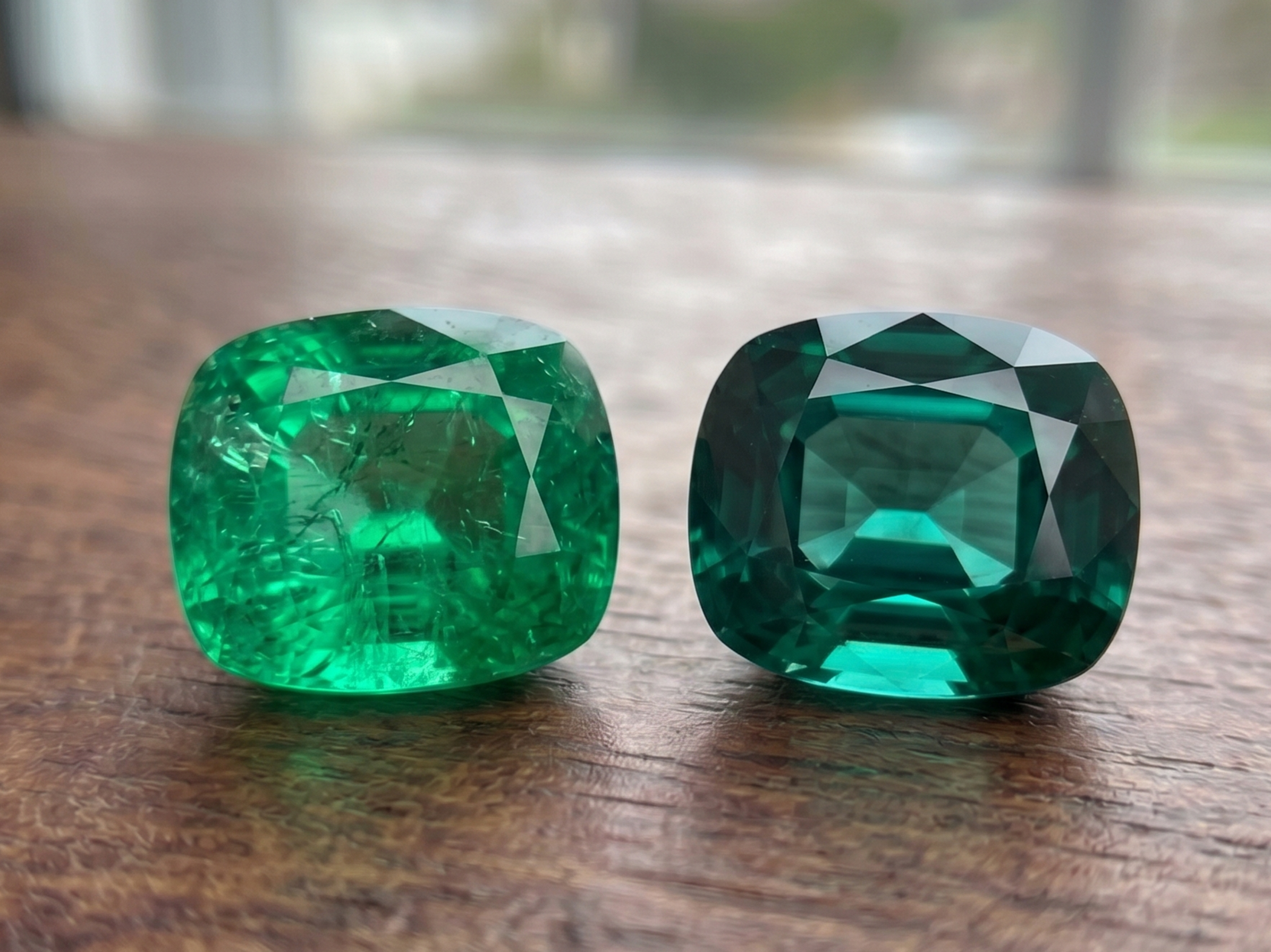
Colombian emerald (left) versus Zambian emerald (right) — both cushion cut. The Colombian stone displays the warmer, slightly yellowish-green color and characteristic jardin inclusions of Muzo-region material. The Zambian stone shows the cooler, deeper bluish-green and stronger clarity that Kagem material is increasingly recognized for. Two different color profiles, two different price points, both legitimate choices depending on client and context.
Colombia has been the world's dominant emerald source for centuries, and its stones — particularly from the Muzo, Chivor, and Coscuez mines — remain the benchmark against which all other emeralds are judged. The finest Colombian material displays a color that gemologists describe as a pure, slightly warm green with exceptional transparency and a quality sometimes called "jardin" — a term for the internal inclusions characteristic of Colombian stones that, in fine material, create a garden-like depth rather than detracting from the appearance.
The color of fine Colombian emerald is distinctive: it tends toward a slightly yellowish-green that many in the trade consider warmer and more desirable than the bluish-green of some competing origins. This is a matter of personal and market preference, but historically, the Colombian color profile has commanded the highest premiums.
Muzo is the most prestigious mine name in the emerald world, associated with deeply saturated stones with strong color and characteristic inclusions including three-phase inclusions (liquid, gas, and crystal) that laboratories use to confirm Colombian origin. Fine Muzo material at top color and clarity is among the most valuable colored stones in the market.
Zambian Emeralds: The Serious Contender
Zambia's Kagem mine — the largest single emerald mine in the world by volume — has transformed the emerald market over the past two decades. Zambian emeralds have become a genuine alternative to Colombian material at every price point, and in some quality characteristics, they offer advantages that the trade is increasingly recognizing.
The color of fine Zambian emerald tends toward a cooler, slightly bluish-green — often described as more saturated and more vivid than Colombian material at comparable price points. The iron content in Zambian stones contributes to this cooler hue and also reduces the fluorescence effect seen in Colombian emeralds, but the visual result can be striking: a deeply saturated, vividly green stone with excellent transparency.
Clarity is often a strength of Zambian material. Zambian emeralds frequently show better clarity than Colombian stones at equivalent color grades, making them attractive for jewelers and designers who need stones that work well in bright, transparent cuts. The inclusions characteristic of Zambian material differ from Colombian inclusions — longer needles, different crystal types — and are used by laboratories for origin determination.
The Oil and Resin Question
Emerald treatment is a conversation every jeweler must be prepared to have. Nearly all emeralds on the market — Colombian, Zambian, and otherwise — are clarity enhanced with oil or resin. This is a centuries-old trade practice that is accepted and disclosed, not hidden. What matters is the degree of enhancement and whether it is properly disclosed.
Laboratory grading reports for significant emeralds will indicate the degree of enhancement: none, minor, moderate, or significant. Stones with no enhancement or minor enhancement command premiums. Stones with significant enhancement are more accessible in price but require appropriate disclosure.
For Colombian emeralds specifically, the traditional treatment is cedarwood oil or a colorless resin. For Zambian material, practices are similar. The key for jewelers is to work with dealers who provide laboratory documentation on significant stones, to understand what the enhancement grade means, and to disclose it to clients accurately.
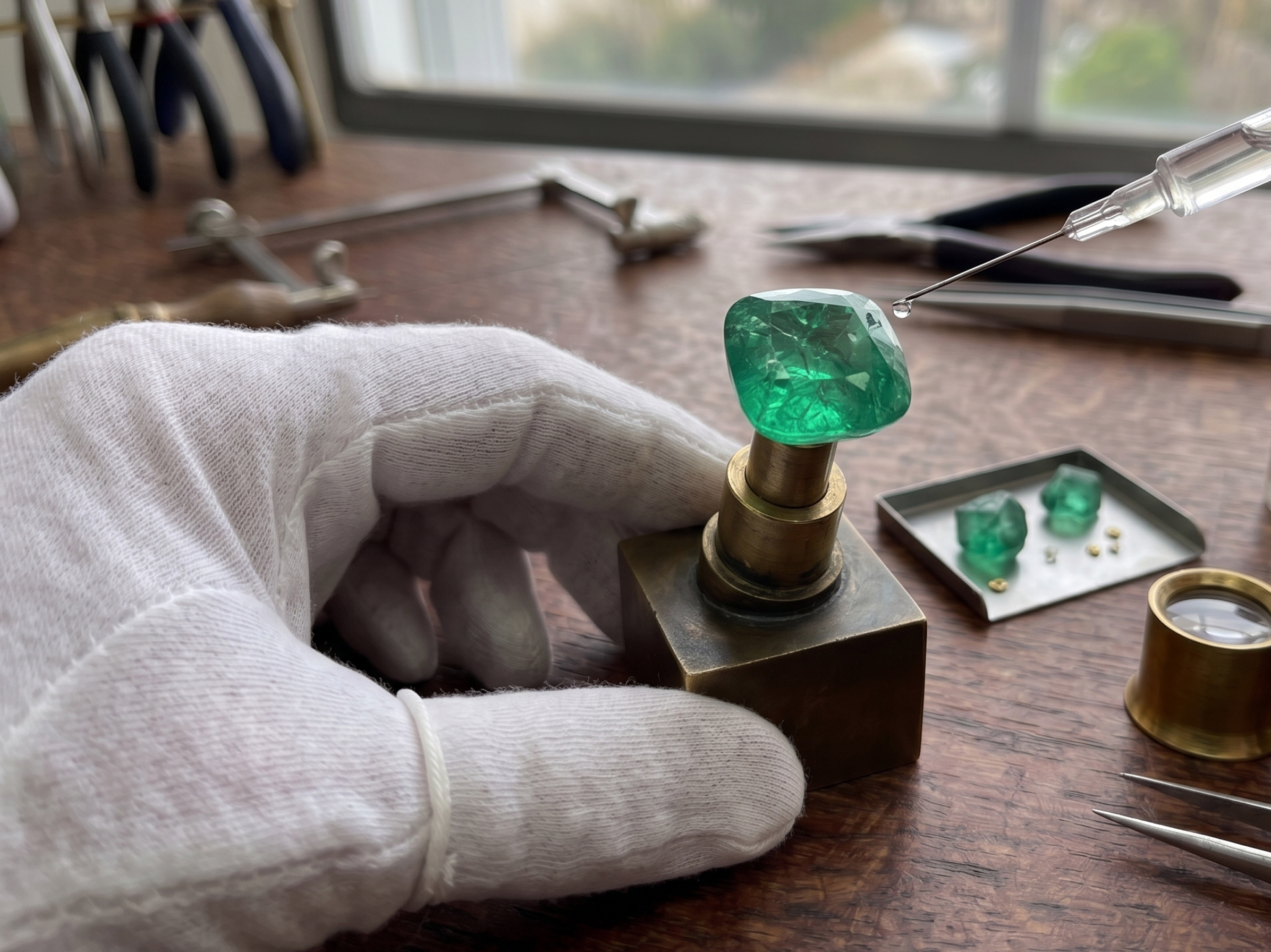
Shown: Resin treatment being applied to an emerald — a centuries-old trade practice that improves clarity by filling surface-reaching fractures. Nearly all emeralds on the market undergo some degree of enhancement. What matters for jewelers and their clients is knowing the grade — none, minor, moderate, or significant — and having it documented in a laboratory report.
Price and Value: How the Markets Compare
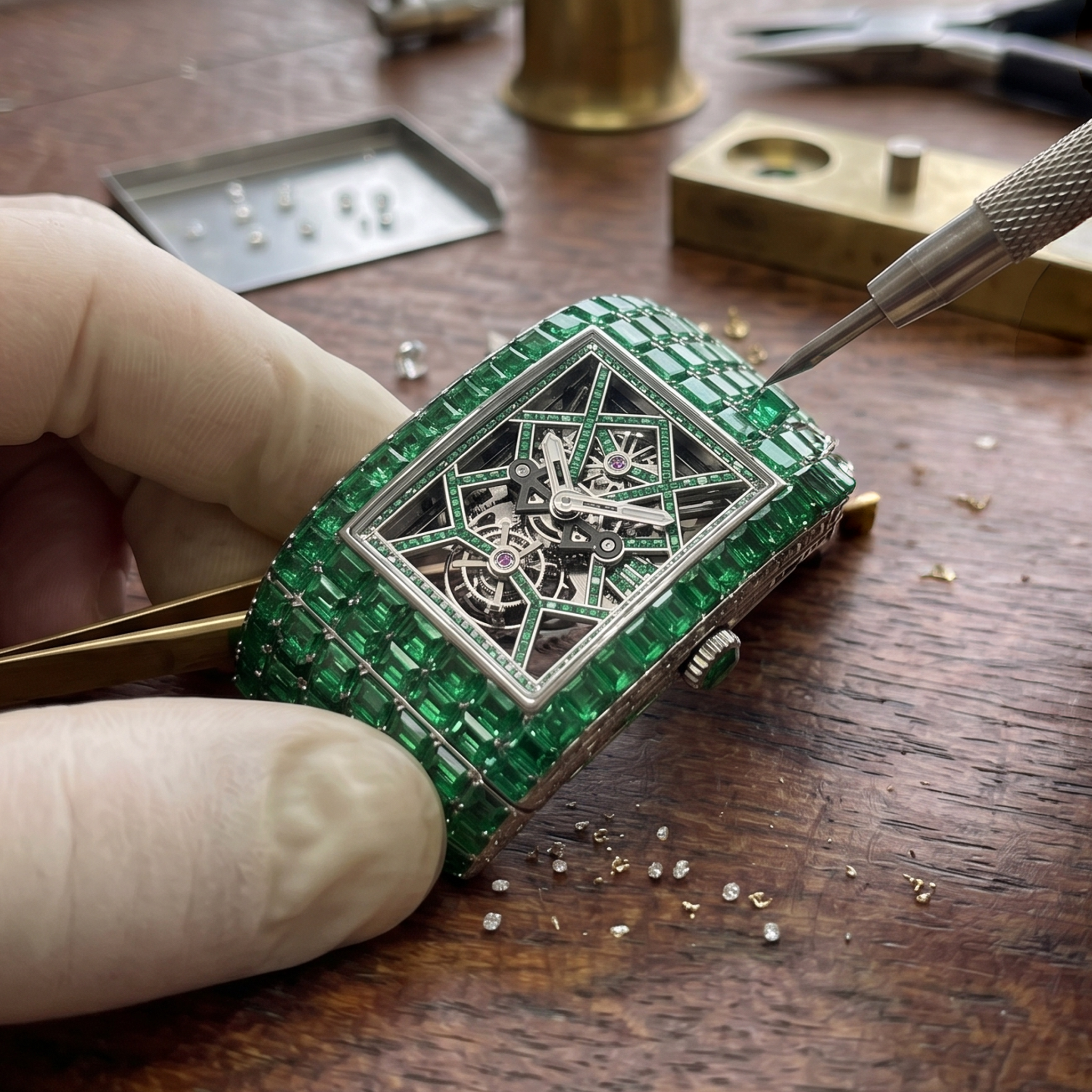
Emeralds are increasingly the stone of choice for luxury watchmakers and high-jewelry applications beyond traditional settings. The vivid, saturated green of emeralds translate powerfully into unexpected formats — pavéd watch cases, architectural jewelry, sculptural pieces — where the color does the design work. As demand for emeralds expands beyond rings and pendants into bespoke luxury objects, consistent access to well-documented, fine-quality material becomes a competitive advantage for jewelers and designers serving this market.
Fine Colombian emerald at top color — vivid green, good transparency, minor enhancement — commands the highest prices in the emerald market. A Colombian emerald with a Muzo origin certificate and strong color is priced at a premium that reflects both quality and provenance.
Fine Zambian emerald at top color can deliver equivalent visual impact at a lower price point — sometimes significantly lower — making it attractive for jewelers who want to offer clients a striking stone with strong value. The "Colombian premium" is real, but it is driven partly by market perception and partly by genuine quality differences at the very top of the market.
For designers working at commercial and mid-luxury price points, Zambian emerald often represents better value. For clients who specifically want the origin story and prestige of Colombian — or who are buying at the collector level where provenance documentation matters — Colombian remains the benchmark.
What to Look for When Sourcing
Regardless of origin, emerald sourcing is about three things: color, clarity, and treatment disclosure. A fine emerald at either origin should display vivid, saturated color without gray or brown modifiers; transparency that allows light to move through the stone rather than being absorbed; and treatment status that is documented and appropriate for the price point.
Origin matters most at the top of the market, where collectors and sophisticated buyers will want laboratory confirmation. At commercial price points, a well-colored Zambian stone with minor enhancement and good transparency often serves jewelers and their clients better than a mid-quality Colombian stone bought primarily for its origin name.
Working with a dealer who sources both origins, understands the quality distinctions within each, and can provide laboratory documentation is the foundation of confident emerald sourcing. The emerald market rewards expertise more than almost any other colored stone category — and penalizes buyers who rely on origin name alone.
Looking for Fine Emeralds?
Jacoby Gems works with jewelers and designers to source both Colombian and Zambian emeralds with full gemological documentation. Whether you need a specific origin, color grade, or enhancement level, we're happy to discuss what's available and what's right for your client.
